Best Manga to Learn Japanese: Beginner to Advanced
The best manga to learn Japanese, sorted beginner to advanced — from Yotsuba&! to Death Note — plus how to actually read them: furigana, a tap-to-define dictionary, and spaced repetition.
Manga is one of the most enjoyable ways to learn Japanese — real language as natives actually use it, with the artwork carrying half the meaning so you're never reading in the dark. The trick is picking a title at your level and having a fast way to look up what you don't know.
This guide does both: the method that makes reading manga actually teach you Japanese, then a beginner-to-advanced list of titles worth starting with.
First, how to read manga so it teaches you
Reading manga as study is different from reading it for the plot. A loop that works:
- Read the Japanese first. Don't reach for a translation until you've tried the panel — the art tells you who's angry, who's joking, what's happening. Lean on it.
- Look up only what blocks you. One or two unknown words per panel, not every word. Fifteen minutes a day beats grinding a dictionary for an hour once a week.
- Save the words you look up. The vocabulary that matters is the vocabulary in the story you're reading — review those, not a generic frequency list.
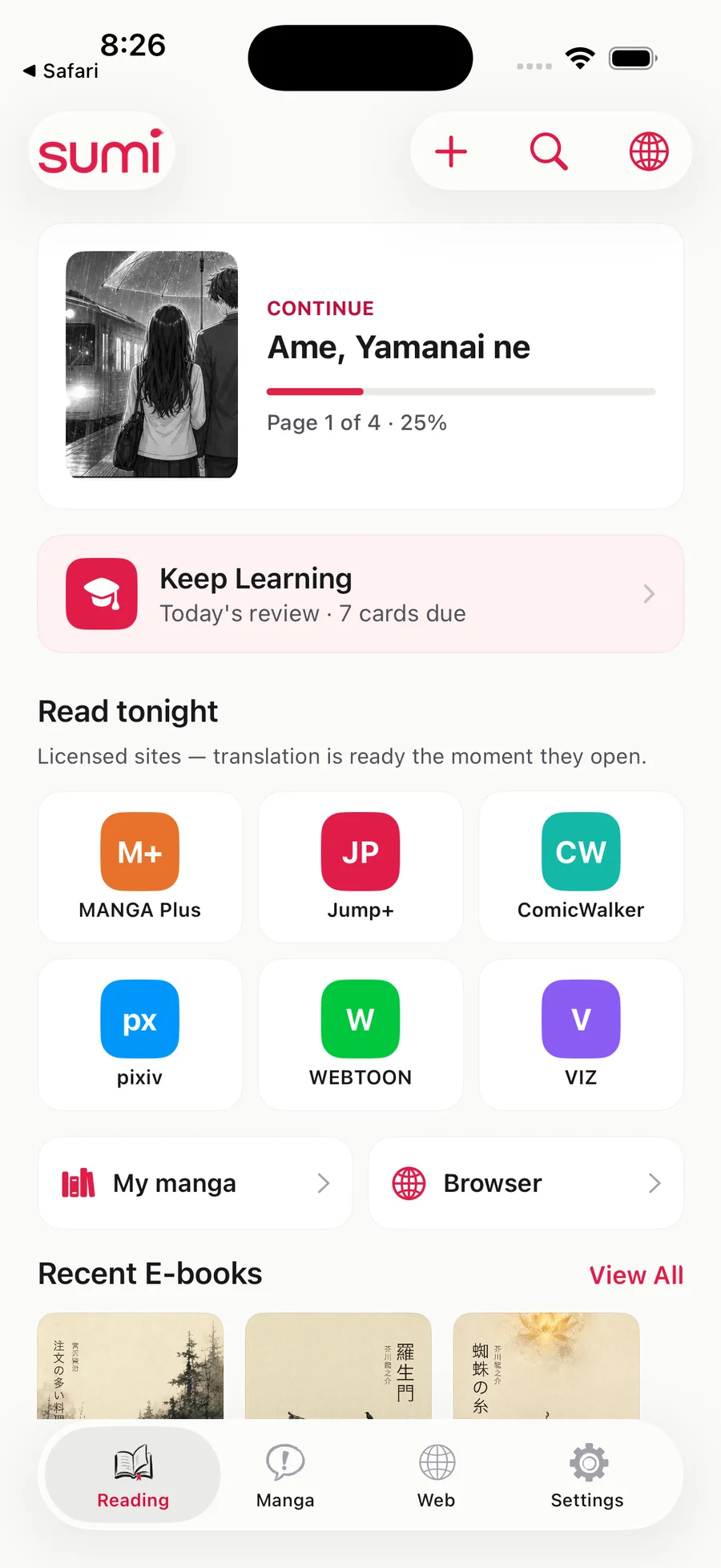
That middle step is where a reader app earns its place. In Sumi, for manga you read the original Japanese and tap a bubble to reveal the translation when you're truly stuck. For Japanese ebooks and light novels it goes further: furigana over every kanji, and a tap on any word for its reading and meaning, saved to a spaced-repetition deck.
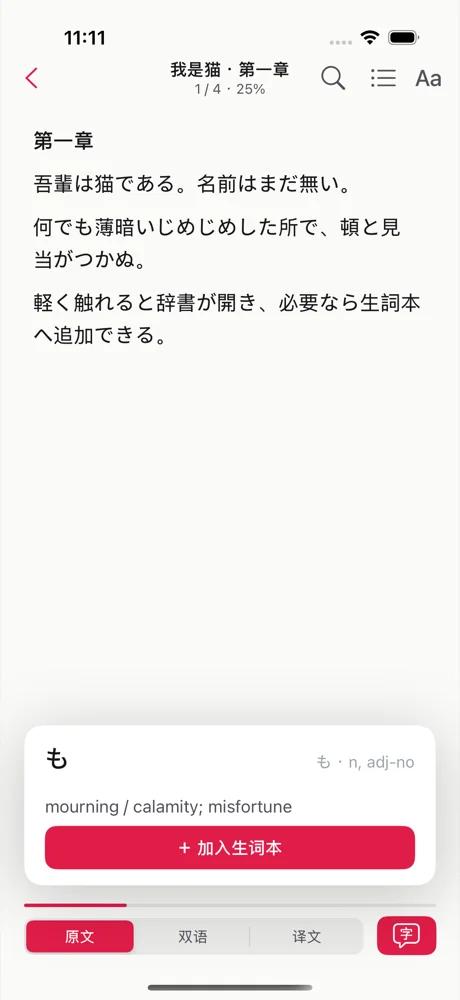
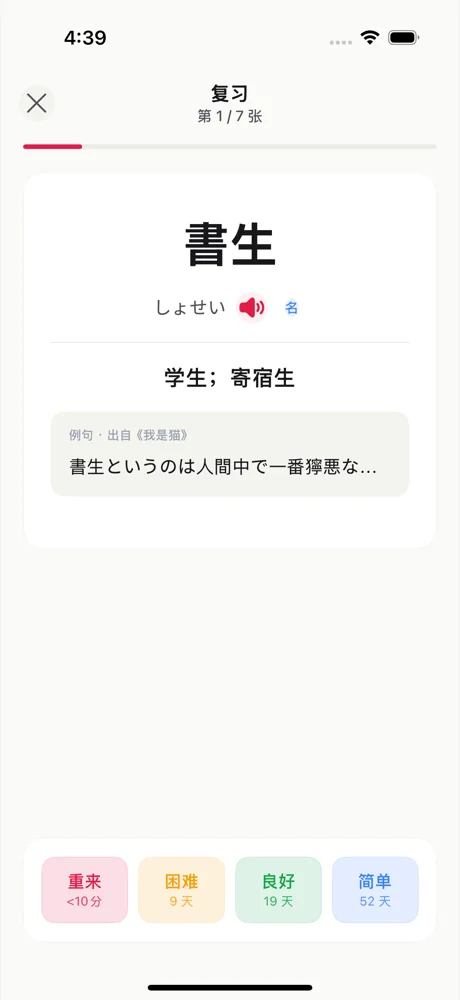
Either way, the words you look up while reading become the deck you review — so the manga you're enjoying is your study material.
Beginner: heavy furigana, everyday vocabulary
Start here if you've finished kana and know a little grammar. These print furigana over the kanji and use slice-of-life vocabulary you'll reuse.
- Yotsuba&! (よつばと!) — the gold-standard beginner manga. A five-year-old discovers everyday life: the park, shopping, the neighbours. Present-tense, conversational, almost no slang. If you read one title on this list, read this one.
- Doraemon (ドラえもん) — decades of teaching Japanese kids to read, which makes it perfect for adult learners too. Simple grammar, full furigana, and episodic, so you can open any chapter cold.
- Shirokuma Cafe (しろくまカフェ) — animals running a café. Polite, clear Japanese and a lot of food and daily-life vocabulary, with gentle puns once you're ready for them.
Intermediate: less hand-holding, real conversation
You know your core grammar and a few hundred kanji and want natural dialogue.
- Flying Witch (ふらいんぐうぃっち) — a trainee witch in rural Aomori. Calm, beautifully drawn, full of natural conversational Japanese without heavy slang.
- Teasing Master Takagi-san (からかい上手の高木さん) — short, repetitive school dialogue that drills casual speech. Low vocabulary load, high reps.
- Detective Conan (名探偵コナン) — for when you can handle longer sentences. The mystery vocabulary recurs, the furigana is there, and the cliffhangers keep you turning pages.
Advanced: native pace, specialised vocabulary
For when you want to read what Japanese adults read.
- Death Note — dense, argumentative dialogue and a lot of abstract vocabulary, with little to no furigana in the original. A real step up.
- Black Jack ni Yoroshiku (ブラックジャックによろしく) — a hospital drama thick with medical and workplace Japanese. Demanding, rewarding, and a good test of whether you can read adult seinen.
- Vinland Saga (ヴィンランド・サガ) — historical vocabulary and weightier prose, for readers comfortable with longer arcs.
Where to get them (legally)
Buy the Japanese editions and you can read them in any reader: Kindle Japan, BookWalker, and MANGA Plus (Shueisha's official app, with free chapters) all sell or stream the originals. Then bring your own copies into a reader like Sumi — it works on the PDF, ZIP/CBZ, EPUB, and MOBI files you own, and never hosts or links to manga itself.
FAQ
Can you actually learn Japanese just from manga? You can learn a lot — especially reading, vocabulary, and how the language really sounds in conversation — but pair it with some grammar study and listening. Manga is the motivation and the reps; grammar is the scaffold.
Do I need furigana to start? As a beginner, yes — it lets you read by sound and look words up without stalling on every kanji. Sumi renders furigana on Japanese ebooks and light novels; for manga, start with titles that print furigana (all the beginner picks above do).
What level should I start at? If you've finished kana and basic grammar (roughly JLPT N5), start with Yotsuba&! or Doraemon. Don't start with something you love but can't read — frustration kills the habit faster than a boring title does.
How does Sumi help me learn while I read? Tap a word for its reading and meaning, save it to a spaced-repetition deck, and review the words from the stories you're actually reading. There's more on learning Japanese with manga, and it's built into Sumi on iPhone, iPad and Mac.
The best manga to learn Japanese is the one you'll actually finish. Pick one a notch below where you think you are, read it with a tap dictionary, and let the words you look up become your study deck.